

Castrations
Colts can be castrated at any age however we recommend performing the castration when the colt is between 6-18 months old. This is because we feel that the younger the colt is when castrated, the fewer problems there are. Generally, younger colt foals tend to recover faster from the operation and have fewer post-operative complications.
We advise performing castrations either in the Spring or mid-Autumn to prevent muddy conditions and reduce the risk of infection from flies.
Pre-castration check
When booking in a castration we will initially undertake a pre-castration check. This is to ensure that both testicles have descended into the scrotum and ensure that the colt is fit and healthy to undergo a general anaesthetic. In some cases, if not already completed, owners will commence their flu and tetanus vaccinations to ensure that the colt is covered for tetanus when administered with the second vaccine at the castration. (Should the colt have not received the first two tetanus vaccines then a tetanus antitoxin will need to be given at the procedure)
If the veterinary surgeon is happy with the checks completed, we will then book you in for a castration.
Castration
If the veterinary surgeon is happy with the premises and the horse is fit and well, we are happy to undertake the castration procedure at your yard as it is less stressful for your colt. Central Equine Vets castrate colts under a general anaesthetic, with two vets present, one to carry out the procedure and the other as the anaesthetist.
Castrations need to be performed in a clean, flat, dry field or in an outdoor or indoor school, as long as the surface is not too dusty. We will not castrate colts within a stable due to the increased risks awakening from the general anaesthetic.
Once anaesthetised, the surgery is relatively quick, generally taking around 30 minutes. After surgery, the gelding is allowed to recover naturally in its home environment. Recovery times from the anaesthetic vary.
The veterinary surgeon will provide any post-operative care requirements and will be available by contacting the practice should you have any concerns.
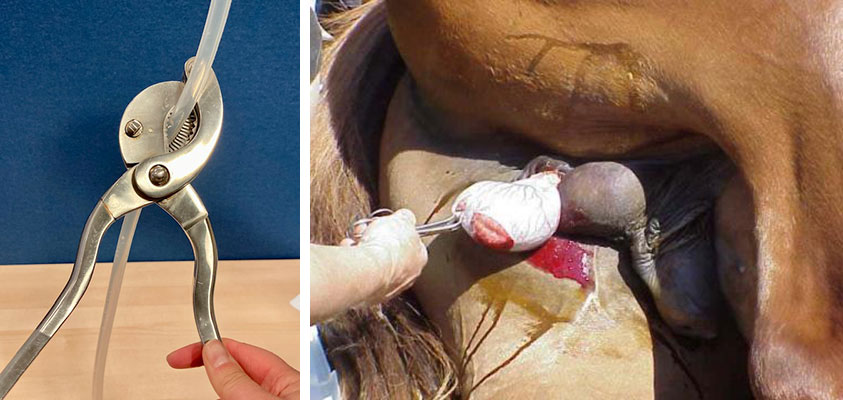
Emasculators used to perform the castration | Open castration procedure being completed at the yard